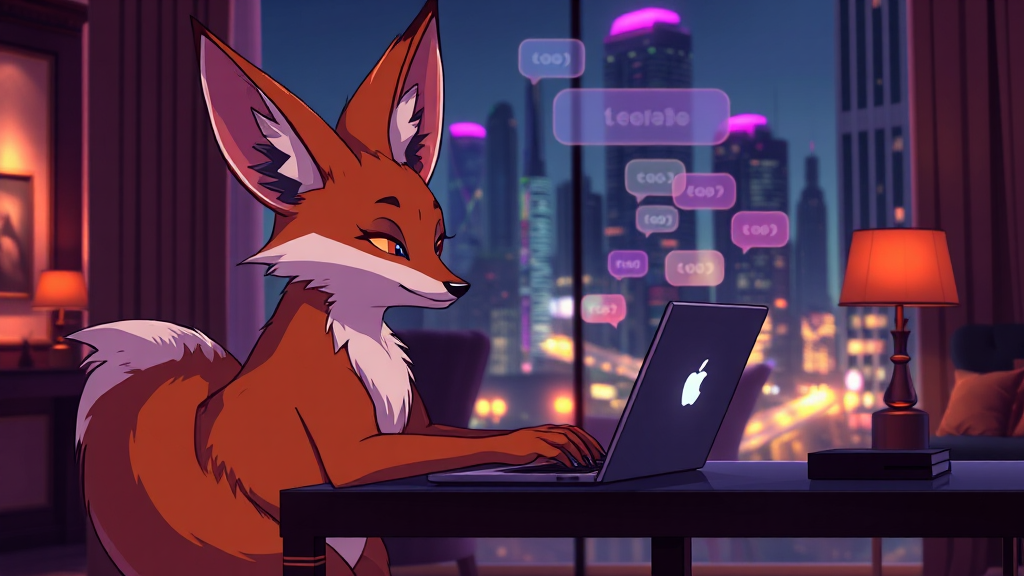
Furry AI Chat NSFW: How Character-Driven Roleplay Is Reshaping Adult AI Conversations
Adult AI chat has grown far beyond generic chatbots that forget what you said three messages ago. One of the fastest-moving corners of this space is furry roleplay, where users build personas, species, backstories, and relationship dynamics with an AI character that responds in real time. If you have been searching for furry ai chat nsfw, you already know the appeal: a private, judgment-free space where imagination sets the rules. This article breaks down how these systems work, what makes a good furry AI character, how to write better prompts, and what to consider before you dive in.
What Furry AI Chat NSFW Actually Means
The term combines three ideas. “Furry” refers to anthropomorphic animal characters — beings with human-like intelligence, speech, and emotion but animal features, ears, tails, fur, scales, or feathers. “AI chat” means a large language model generating replies turn by turn, adapting to your tone and history. “NSFW” signals that the conversation may include mature, romantic, or explicit themes intended for adults.
Put together, furry AI chat NSFW is an interactive storytelling format. Instead of reading a static story or browsing artwork, you co-write a scene with a character. You type an action or a line of dialogue, the model responds in character, and the narrative moves forward. The best platforms remember your character’s personality, your shared history, and the boundaries you set at the start.
That last point matters. A well-designed adult AI chat experience is not just about unrestricted content — it is about context. A shy wolf scholar should not suddenly sound like a brash mercenary. Consistency is what separates a novelty from something people return to nightly.
Why Anthropomorphic Characters Work So Well With AI Roleplay
Furry characters are unusually well suited to AI-driven conversation, and the reasons are more practical than they first appear.
Visual identity is built in. Species, fur color, ear shape, and tail behavior give you instant imagery without lengthy description. You can say “a fox with a scarred left ear” and both you and the model share a clear mental picture.
Personality archetypes are flexible. Animal traits map naturally onto human temperaments. A protective bear, a mischievous raccoon, a regal dragon — each suggests a voice and a rhythm of speech that the AI can maintain.
Worldbuilding comes free. Furry settings often imply their own rules: packs, clans, hybrids, magic systems, futuristic cities. That gives the model rich context to draw from without you writing a novel before the first message.
Emotional distance helps. Some users find it easier to explore vulnerable or intimate scenarios through a character that is not literally themselves. The anthropomorphic frame adds a layer of creative play that makes adult themes feel less exposed.
How a Furry AI Chat Session Usually Flows
Most platforms follow a similar structure, even if the interface differs.
1. Character selection or creation. You either pick from a library of pre-built personas or design your own. Custom builds typically ask for a name, species, appearance, personality traits, speaking style, and any backstory details you want the model to remember.
2. Setting the scene. You establish where the conversation takes place — a rain-soaked alley, a starship lounge, a quiet cabin. Scene-setting prompts dramatically improve reply quality because the model has something concrete to react to.
3. Turn-by-turn exchange. You write as yourself or as a second character. The AI responds in the voice of its persona. Good platforms track emotional tone, so a tense scene stays tense instead of resetting to cheerful small talk.
4. Escalation or de-escalation. In NSFW contexts, the intensity can rise, fall, or pause based on what you write. The model should follow your lead rather than forcing a direction.
5. Memory and continuity. Strong systems retain key facts across sessions — names, relationships, promises, injuries, inside jokes. This is where the experience stops feeling disposable.
Writing Prompts That Get Better Replies
The single biggest factor in reply quality is how you write. Vague inputs produce vague outputs. Here are practical habits that consistently improve furry AI roleplay.
Show action, not just dialogue. Instead of “What are you doing?” try “I lean against the doorframe, ears flicking toward the sound of your claws on the floor. What are you doing up this late?” The model now has physical detail and mood to work with.
Give the character something to react to. Emotional stakes beat neutral questions. Fear, curiosity, affection, and irritation all produce richer responses than small talk.
Set boundaries early. State your limits and preferences in the first few messages. Most modern systems respect them, and it prevents awkward corrections later.
Name the tone. Words like “playful,” “tense,” “tender,” or “sarcastic” act as tuning dials. They cost nothing and change everything.
Correct gently and specifically. If a reply breaks character, say what drifted and what you want instead. “You sounded too formal — she is casual and teasing” works better than a vague complaint.
Reward good turns. When the AI nails a moment, continue in that direction. Models adapt to the style you reinforce.
Privacy, Safety, and Responsible Use
Adult AI chat raises legitimate questions, and it is worth thinking about them before you commit time or money.
Data handling. Check what the platform stores and whether conversations are used for training. If privacy matters to you, look for clear policies and options to delete history.
Age requirements. NSFW features should be restricted to adults. Reputable services verify this rather than relying on an honor system.
Content boundaries. Even permissive platforms draw lines around illegal or harmful material. Understanding those limits upfront avoids frustration.
Emotional balance. AI companionship can be genuinely enjoyable, but it should complement real-life relationships and wellbeing, not replace support you need from people or professionals.
Spending discipline. Many platforms use credits or subscriptions. Set a budget before you start, especially if you enjoy long sessions.
What Separates a Good Platform From a Frustrating One
Not all furry AI chat tools are built equally. In practice, the differences show up in a few areas.
Memory depth. Can the character recall details from twenty messages ago? From last week? Shallow memory breaks immersion fast.
Character consistency. The persona should hold its voice across moods and topics. Drift is the most common complaint among experienced users.
Response length control. Some users want short, punchy exchanges; others want paragraph-long narrative prose. Flexibility matters.
Creation tools. Detailed character builders, appearance fields, and backstory prompts make custom personas far more satisfying than generic templates.
Community and discovery. Browsing what others have created can spark ideas and surface well-written personas you would never have imagined.
Performance. Fast response times and stable uptime matter more than flashy features once you are mid-scene.
The Broader Shift Toward Personalized AI Entertainment
Furry roleplay is one visible example of a larger trend: AI moving from utility tool to entertainment medium. People are not just asking chatbots for facts anymore. They are asking them to be someone — a companion, a rival, a confidant, a character in an ongoing story.
That shift explains why anthropomorphic personas have such staying power. They combine the accessibility of chat with the depth of fiction. You get narrative, emotional texture, and creative control in a format that fits into a fifteen-minute break or a long weekend evening.
It also explains why quality varies so much. Building a system that remembers, stays in character, and respects user boundaries is harder than it looks. The platforms that invest in memory architecture and character design tend to attract the most devoted communities.
Getting Started Without Overthinking It
If you are new to this space, a simple approach works best. Pick one character that appeals to you. Write a short opening scene with a clear location and mood. State your preferences in plain language. Then just play.
Do not worry about writing perfectly. The model adapts to your style. Short, specific messages often outperform long, ornate ones because they give the AI clear cues. As you get comfortable, you can add more detail, build secondary characters, and develop longer story arcs.
The most rewarding sessions usually come from treating it as collaborative writing rather than a vending machine for content. You bring direction; the AI brings voice. When both are working, the result feels less like using software and more like telling a story with someone who never gets tired of your ideas.
FAQ: Common Questions About Furry AI Chat NSFW
Is furry AI chat NSFW legal?
For adults, fictional roleplay with AI is generally permitted in most jurisdictions, but rules vary by country and platform. Always check local laws and the service’s terms of use. Reputable platforms restrict mature content to verified adults and prohibit illegal material.
Do I need to be part of the furry community to enjoy it?
No. Many users are simply interested in creative roleplay, fantasy storytelling, or character-driven conversation. The anthropomorphic framing is a creative tool, not a membership requirement.
How do I keep an AI character consistent across sessions?
Use platforms with strong memory features, write a detailed character profile, and restate key facts when a new session begins. Naming a few core traits — species, temperament, speech style — helps anchor the persona.
Can I create my own furry character instead of using a preset?
Yes, most modern platforms offer character builders. You typically define appearance, personality, backstory, and speaking style. The more specific your profile, the more distinctive the AI’s replies tend to be.
What should I avoid sharing in adult AI chats?
Avoid personal identifiers such as your full name, address, workplace, financial details, or anything you would not want stored. Treat the conversation as semi-public even on private platforms, and review the service’s data policy.
Are these conversations private?
Privacy depends entirely on the platform. Some encrypt and delete conversations; others retain them for model improvement. Read the privacy policy carefully and choose services that match your comfort level.