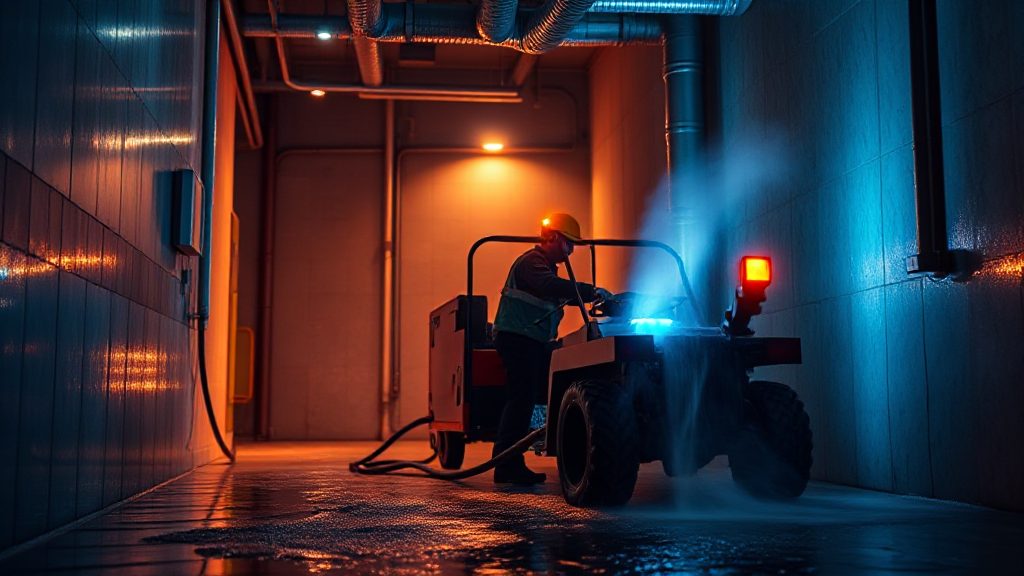
Why Does Everyone Get the First Call Wrong When They Need a Desentupidora Vila Jacuí?
I moderate a neighborhood group in Vila Jacuí, and the same question lands almost every week: water is backing up, the drain is gurgling, and someone is already reaching for the plunger. That is the most common mistake people make. They treat a blocked sewer line as a sink problem, and by the time they call a desentupidora Vila Jacuí, the mess has spread to the laundry area or the sidewalk. Here is the order of events I usually walk first-timers through, based on what actually happens in this part of São Paulo.
What usually happens in the first ten minutes
The call comes in after dinner, when the whole family is home and the shower is running. Water rises in the floor drain, then the toilet bubbles. The instinct is to keep flushing or pour a bottle of caustic soda down the pipe. Both make it worse: flushing adds volume to a line that is already full, and chemicals sit against the blockage without clearing it, sometimes damaging older PVC joints.
What the crew needs to hear on the phone is simple: where the water is coming up, whether it is only one fixture or several, and whether the property is a house, an apartment or a shop. That single detail decides whether they bring a manual snake, a rotating cable machine or a hydrojetting truck. A blocked main line behaves differently from a clogged branch drain, and the equipment is not interchangeable.
Why the address matters more than people think
Vila Jacuí sits in the eastern zone of the city, with a mix of older houses, small commercial buildings and condominiums built at different times. Older properties often have clay or cast-iron lateral lines that have shifted with the soil, so roots find their way in. Newer buildings may have undersized grease traps in the kitchen line. When you search for a desentupidora Vila Jacuí São Paulo SP, you are not just looking for a phone number — you are looking for a team that knows which streets have shallow inspection boxes and which buildings share a single outlet to the public network.
That local knowledge shows up in small ways. A technician who has worked the area before knows to check the inspection lid near the gate before pulling equipment through the house, and knows that some lots have a secondary grease chamber behind the kitchen wall. Skipping that check is how a two-hour job becomes an all-night one.
What the technician actually does when they arrive
The first move is not the machine. It is a visual check: lift the inspection cover, look at the water level, and smell the line. If the water is standing high and dark, the blockage is likely in the main run. If it drains slowly but steadily, the problem may be further downstream or partly in the branch.
- Confirm which fixtures are affected and mark the lowest drain point.
- Open the inspection box and check for standing water or roots.
- Choose the tool: cable machine for a local clog, hydrojetting for grease and scale.
- Clear the line, then flush with clean water to confirm flow.
- Check the grease trap or septic tank if the property has one.
Hydrojetting is the step most first-timers have never seen. A high-pressure hose with a forward jet scours the pipe wall instead of just punching a hole through the clog. That matters because a cable can open a channel and leave grease behind, and the line blocks again in a few weeks. For kitchen lines and older cast-iron pipes, scouring the wall is often the difference between a repair and a repeat visit.
Where the cost conversation usually goes wrong
People compare prices on the phone as if every blockage is the same. It is not. A single floor drain in a house is a short job. A condominium with a shared line, a full grease trap and a septic tank that has not been pumped in years is a different scope entirely. The honest way to compare quotes is to ask what is included: inspection, equipment, disposal of removed material, and a follow-up check.
Be cautious with any quote that is far below the rest and given without seeing the property. In my experience, those calls end with a higher number once the technician is on site and the line turns out to be deeper or longer than described. A desentupidora em Vila Jacuí São Paulo SP that asks questions before quoting is usually the one that stays close to its estimate.
What to do while you wait for the team
Stop using water in the affected area. Do not run the washing machine, the dishwasher or the shower on that line. Put towels or a shallow bucket under the lowest drain to catch overflow, and move anything stored on the floor of the laundry room or garage. If the backup is reaching a floor drain in a common area of a building, tell the doorman so neighbors can avoid the same line.
Do not open the inspection box yourself unless you are sure of what is inside. Sewer gas is unpleasant but the bigger risk is a rush of backed-up water when the lid comes off. Leave that to the crew, and keep children and pets away from the area until the line is flowing again.
Preventing the same call next season
Most repeat blockages I hear about come from the kitchen line. Cooking oil poured down the sink cools and sticks to the pipe wall, and over a year it narrows the opening until a normal amount of water cannot pass. Collect used oil in a bottle and dispose of it with the trash. Use a strainer in the sink and clean it before it fills.
For houses with a septic tank, pumping on a schedule matters more than any chemical product. A tank that is never emptied sends solids into the drain field, and that is a much larger repair than a routine pump-out. Buildings with a grease trap should have it cleaned before it reaches the point where water backs up into the kitchen — not after.
Lessons from the group, in short
The pattern is consistent. The people who call early, describe the problem clearly and ask what the job includes tend to spend less and wait less. The ones who spend an hour with a plunger and a bottle of chemicals usually end up calling anyway, with a bigger mess and a line that is harder to clear.
If you take one thing from this: a sewer backup is a symptom, not a stain to wipe up. Treat the first call as the start of a diagnosis, not a transaction. Ask what the technician will check, ask whether the price includes the inspection, and ask what to do if the blockage returns. Those three questions will tell you more about a company than any advertisement.
Frequently asked questions
How quickly can a team reach Vila Jacuí?
Response time depends on traffic and the time of day, but emergency services in the eastern zone usually give an estimate on the phone. Ask for a window, not just a promise, and confirm whether the quoted price covers the inspection.
Can I clear a blocked sewer with a plunger or hot water?
Only for a single slow drain. If more than one fixture is backing up, the blockage is in the main line and a plunger will not reach it. Hot water can soften grease temporarily but rarely clears a full blockage.
Does hydrojetting damage old pipes?
When the pressure is set correctly and the pipe condition is checked first, hydrojetting is safe for most older lines. The technician should inspect the line before choosing the pressure level, especially in houses with cast-iron or clay pipes.
None of this replaces a proper diagnosis on site, but it should make your first call a better one. That is the whole point of the walkthrough.